
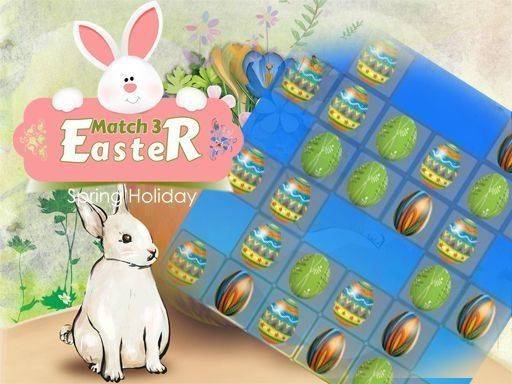
Colorful Egg Tile Swap
Reviews
Colorful Egg Tile Swap succeeds by keeping its core loop tight and its presentation cheerful. The board objectives vary enough to prevent monotony, and the special tiles add meaningful choices without overwhelming newcomers. Difficulty scales smoothly, so early stages feel rewarding while later ones demand real planning. The lack of timers is a welcome touch for those who prefer thoughtful play. Overall, it is a solid choice for anyone seeking a low-stress puzzle experience.
About this game
Core Matching Mechanics
Players select an egg tile and slide it into a neighboring position. When three or more identical eggs align in a row or column, those tiles vanish and award points. The board then refills from above, creating fresh opportunities for chain reactions. This straightforward loop forms the foundation of every session, allowing newcomers to grasp the rules within seconds while offering veterans room to plan ahead.
Level Objectives & Variety
Each stage comes with a distinct requirement. Some ask for a minimum score, while others demand collecting a specific number of a certain egg type. Later boards introduce obstacles like locked tiles or limited moves, forcing players to prioritize targets over random matches. This structure keeps the experience fresh and prevents repetitive play.
Boosters and Special Tiles
Certain tiles on the board have unique properties. An hourglass-shaped tile clears a wide area when matched, removing stubborn obstacles in its radius. A cheerful egg tile grants extra moves or a point bonus when activated. Using these tools at the right moment can turn a tight situation into a winning streak, especially on harder puzzles.
Visual Style and Atmosphere
The art direction uses bright, saturated colors and rounded shapes to create a welcoming look. Each egg tile has a distinct pattern, making them easy to distinguish at a glance. Animations are smooth but quick, ensuring that gameplay remains snappy. There are no dark or intense themes, making the game appropriate for shared family spaces.
Pacing and Difficulty Curve
Early boards serve as a gentle introduction, with generous move counts and simple goals. As players advance, the move limit shrinks and obstacles become more frequent. This gradual ramp means that frustration is rare, but the challenge grows enough to keep dedicated players engaged. Short session lengths also make it easy to pick up for a few minutes at a time.






Comments
Sign in to leave a review
No account? Create one
No comments yet.